The events that took place during West Ham United’s heavy defeat to Burnley showed that the atmosphere around the club has now gone beyond toxic.

Two seasons ago West Ham United finished seventh in the Premier League and qualified for Europe under the guidance of Slaven Bilic, in what was their final campaign at the infamous Upton Park. 

There was a sense of optimism in and around the club during the summer of 2016 ahead of their move to the Olympic Stadium. The directors and supporters both felt that this was the beginning of a historical period for the Hammers – visioning a team containing a plethora of talent that would challenge in and around the top six.

Fast forward 24 months and Bilic has now gone – replaced by an uninspiring David Moyes, with the club languishing dangerously above the relegation places.

A lack of incomings in the January transfer window, a ever-extending list of injuries and players severely underperforming have all played a part in the team’s dismal form of late.

The Hammers have won just one of their last seven league matches, been knocked out of the FA Cup by League One side Wigan Athletic, and have conceded 11 goals in their last three outings.

So for some, yesterday’s 3-0 heavy home defeat to Burnley was the final straw.

Some dissatisfied fans ran onto the pitch, whilst others headed towards the directors box to voice their discontent. Joint chairman David Sullivan is said to have been hit by a coin thrown by an angry fan, whilst team captain Mark Noble got caught up in an unpleasant tussle on the half-way line with another.

These unsavoury actions confirmed that the atmosphere in and around West Ham has gone beyond toxic.

Whilst I understand fans wanting to voice their opinions and wanting to protest against how their club is being run, yesterday crossed a line. The havoc that occurred will have done nothing to stop the team from sleepwalking towards the trapdoor.

West Ham’s record at London Stadium since moving to their new home has been appalling to say the least, but the players need their fans to stick by them on a matchday, not riot both on and off the pitch.

You could hear it in Noble’s post-match interview that the crowd trouble had a terrible effect on them. Why would anyone want to play in claret and blue when the stadium suddenly becomes a war zone after the team concede a goal.

Credit must go to Burnley. Their staff and players allowed young home supporters to sit on their bench, away from the chaos. What were West Ham’s bench doing at that time? Twitching their thumbs and wondering how it had all come down to this.

The Football Association have condemned the crowd disturbances and have said they will be in close contact with the club to make sure that similar events never reoccur.

Could the Hammers be forced to play their home matches behind closed doors? Potentially.  That would be something nobody associated with West Ham wants, and something that could further hinder any chance of them retaining their top flight status.

Moyes’ men face a crucial six-pointer against fellow strugglers Southampton in three weeks’ time at London Stadium. During these next 20 days or so, everything has to be done to make sure nothing like we saw against Burnley resurfaces.

It was a day where the home supporters had initially gathered to commemorate the life of club legend and World Cup winner Bobby Moore before kick-off. But by full-time a dark mist had quickly descended in and around the stadium.

I wonder what the late great Moore would have thought of yesterday’s events?

Dreams of playing the likes of Milan, Madrid and Lyon on big European nights are now long gone, and instead replaced by thoughts of travelling to the likes of Middlesbrough, Millwall and Barnsley in the Championship. This is quickly becoming a realistic future for West Ham United, should nothing radically change both on and off the field.

A look back at the life of Sir Roger Bannister (1929-2018).

The world of athletics has today been grieving following of the death of Sir Roger Bannister. 

Bannister, who passed away at the age of 88, became the first man to run the mile in less than four minutes.

His time of 03:59.4 instantly gave him legendary status within the sport.

His story is one of perseverance, redemption and ultimately much joy and happiness. He inspired generation upon generation and was often looked up to as one of the great pioneers of British athletics.

Tributes have poured in from some huge names – including IAAF President Lord Seb Coe – to commemorate Bannister’s life as both a runner and for his work as a world renowned neurologist.

Here’s a look back at the glistening career of one of British sport’s biggest stars.

Bannister was born in Harrow on 23rd March 1929.

He took up running at the age of 17 and was considered to represent Great Britain at the 1948 Olympics in London, but at the time he didn’t feel ready to compete at such a high level.

He was subsequently inspired by the games and set himself a target of competing at the next Olympics, hosted by Helsinki, four years later.

However, things didn’t go to plan for the Brit in the Finnish capital.

Bannister scrapped through his 1500m semi by finishing fifth, before ending the Olympic final fourth and out of the medals.

Feeling down, deflated and defeated after his disappointing result, Bannister almost gave up with athletics. But after taking a two-month sabbatical, he instead gave himself a new goal: to become the first person to ever run the mile below four minutes.

Using his own cleverly devised training programme, his times showed significant improvements throughout 1953 and early ’54.

The historic moment took place on 6th May 1954 at Iffley Track in Oxford, where he finished six hundredths of a second clear of four minutes. Scenes of celebrations followed, but they were to be short-lived.

Finland would once again came back to haunt him as fierce rival John Landy broke his world record run just 26 days later in Turku with a time of 03:58.0

The rivalry between the Briton and Australian led to one of the most anticipated mid-distance races in history at the 1954 Commonwealth Games in Vancouver.  Built up as the ‘Miracle Mile’, Bannister would end up triumphant on this occasion, with a personal best of 03.58.8.

A bronze statue of the two racers can still be found in the Canadian city.

Towards the end of 1954, Bannister retired from athletics and was awarded a CBE 12 months later for his contribution to the sport.

Following retirement, he focused on studying in Medicine, and went on to become a successful neurologist. He felt his 40 years practising in neurology was a more important and more significant acccomplishment in life than his achievements on the track.

Bannister was knighted in 1975, and also became the first chairman of what is now known as Sport England.

In 2002, the British public voted in a poll conducted by Channel 4 that Bannister’s sub-four minute mile was 13th in the list of  ‘100 Greatest Sporting Moments’.

In 2011, Bannister revealed he was suffering with Parkinson’s Disease in a interview with the BBC, and he died peacefully surrounded by his family on 3rd March 2018.

RIP Sir Roger. You will be surely missed.


MLS 2018: Despite his disastrous tenure at Aston Villa, Remi Garde is still quite a coup for Montreal Impact.

When Remi Garde left his position as Aston Villa manager in March 2016, his managerial reputation was in tatters. 

The 51-year-old Frenchman won just two of his 20 league matches in charge of the Villans, which culminated a win percentage of just 10%. It’s the lowest of any Aston Villa manager in the club’s history.

Yet, his unveiling as Montreal Impact’s fifth head coach in seven years is still quite a coup for the Canadian outfit and for the MLS in general.

Before his disastrous spell at Villa Park, Garde had worked up a rather impressive CV. As a player he won at least one trophy at every club he played for- including a Premier League title with Arsenal in 1997-98.

The former Lyon, Strasbourg and Gunners midfielder also saw success follow him in his early coaching career.

Garde took over from the dismissed Claude Puel at Lyon in 2011. During his time in charge of Les Gones he won two trophies – the Coupe de France and Trophèe des champions.

This resulted in him being linked to some of the biggest jobs in football – including a possible return to the Emirates to replace his mentor Arsene Wenger.

Whilst his ill-fated tenure at Villa has probably seen that opportunity fade away for Garde, the manager’s job at the Villans was at the time a poisoned chalice.

The club were rooted to the bottom of the Premier League, and the players at the club lacked the desire the 51-year-old demanded. A promise of January signings by Randy Lerner never materialised into nothing more than false pretences. You could therefore say that he had no chance of turning the fortunes of the club around.

It may surprise some that he’s decided to move halfway across the world for his new managerial venture at Montreal, but his appointment may prove to be shrewd bit of business by owner Joey Saputo.

The main issue will be the longevity of this partnership between Garde and Impact.

Montreal have a reputation in the MLS to hire and fire head coaches on a consistent basis. The 51-year-old becomes the franchises’ fifth in just seven seasons, and may need to get off to a strong start in order to keep the board happy.

On the other hand, the temptation and the glamour of European football could sway Garde back across the Atlantic Ocean should he do well in Canada. He only lasted at Lyon for three years before leaving for family reasons. Neither party likes to overstay their welcome.

The Frenchman is another recognisable manager to have joined the MLS in recent seasons as the league’s appeal continues to gradually grow. Former Barcelona and Argentina boss Tata Martino became head coach at Atlanta United last year, with Bob Bradley returning to the league to take charge at new franchise Los Angeles FC.

Garde has had all winter to prepare his team ahead of their opener against Vancouver Whitecaps this weekend. A key signing he has brought in is that of former Inter Milan midfielder Saphir Taïder to help bolster the midfield.

Last year was one to forget for Impact, with a ninth place finish in the Eastern Conference and 17th overall. But if Garde can find that formula that saw him win trophies with Lyon, he could make this Montreal side a real force in the league and regular post-season contenders.

Something that will surely have a positive impact on his dented managerial career and help him recover that early reputation of being one of the best in the business.


Footballer Gerard Pique is showing his business ambitions with plans to reform tennis’ Davis Cup into an 18-nation extravaganza, but his proposal needs some finishing touches.

Hours before lining up for Barcelona in their La Liga match against Girona last Saturday, Gerard Pique gave a presentation to the International Tennis Federation proposing a radical change that could make or break the men’s game. 

Pique
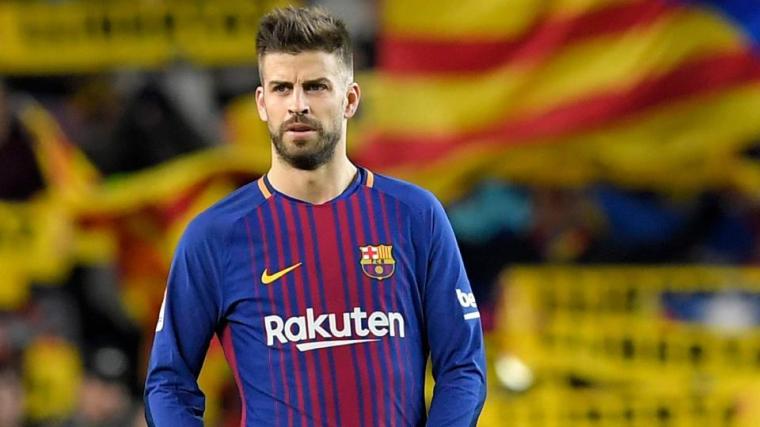
Pique and his company Kosmos have entered a partnership with the ITF. Image Credit: https://tribuna.com/fcbarcelona/en/news/1669524/

“Together we can elevate the Davis Cup to new heights by putting on a must-see World Cup of Tennis Finals featuring the top nations and top players,” said the 31-year old footballer, who for a long time has had entrepreneurial ambitions he plans to pursue now and long after hanging up his boots.

The Spaniard, with the backing of Barcelona shirt sponsors Rakuten, is set to cough up an investment of £2.2 billion – spread over a 25 year period – to help transform the Davis Cup into an 18-nation extravaganza.

This would mean the likes of Roger Federer, Rafael Nadal and Novak Djokovic could all  compete for up to £14.1 million in prize money as part of the revamp set to take place next year.

Pique is a huge tennis fanatic. The proud Catalan tries to get to as many events in his native Spain as possible, which even includes throwing himself into the lion’s den by visiting rival city Madrid to watch the sport he adores. Now he plans to help it reach new heights.

The World Cup of Tennis Finals – which would take place over the course of a week in November – is both his and the ITF’s answer to prolong the sport’s historic men’s team competition as a major global sporting event.

For many the change is needed. The Davis Cup has been stuttering at late and needs to be regenerated into something that will get people talking about it again.

A final meeting is scheduled for August in Orlando, USA to decide whether to finalise the proposal. A two-thirds majority is needed to give the new tournament the green light.

The format of the new competition would follow a similar set-up to that of many World Cups in other sports, with an initial round robin (six groups of three) followed by a knockout phase (quarter-finals, semi-finals and final). The 16 World Group nations will automatically qualify for the finals, with a further two places up for grabs.

pique 2.jpg
Pique has played in 265 matches for Barcelona. Image Credit: AFP via. https://www.hindustantimes.com/football/gerard-pique-extends-fc-barcelona-deal-till-2022/story-htc31UfLMWxzuFU0nqsloK.html

Pique may see this as the new big thing for tennis, but there are still question marks about one or two aspects of the Spaniard’s proposed blockbuster.

One of the greatest aspects of the Davis Cup was the home and away ties. Playing on different surfaces and either with or against a home crowd provided every nation with a different challenge at every round. Having the World Cup located in one place could hinder that.

This new competition could therefore follow the example of others World Cup and have a different host each year. With countries bidding for the Finals, it could help grab fans attention and generate that level of excitement knowing that the tournament was coming to your home city.

With 18 nations taking part you’d expect around 100 tennis stars to be involved in the week-long event. Normally it’s only during one of the Grand Slams where you’d have the opportunity to see all your favourite players in one place. This again makes it appealing for countries who aren’t home to one of the four major tournaments and can accommodate so many fans and athletes to bid for the competition.

To host something of this magnitude costs a lot of money though, and with Japanese company Rakuten pledging their allegiance into the project, there is a good chance that the World Cup will take place somewhere in Asia.

Another issue would be player participation. The exhausting ATP Tour season and gruelling Grand Slams already make it a demanding calendar for the stars. Injuries have hijacked the sport’s biggest names in recent years, with many of the top players deciding to finish their season in October so that they can fully recover and recharge the batteries.

The Davis Cup has had a constant struggle with this problem in recent times, with only two of the current top 10 in the rankings taking part in the first round of the competition earlier this year.

The money may be an enticing incentive for the players, but you’d feel that more will be needed to get the likes of Roger Federer, Novak Djokovic, Rafael Nadal and Andy Murray fully on board and extend their seasons by another couple of weeks.

Pique has also got to think about sustaining the competition past it’s initial phase.

You’d assume that for the first couple of years people will flock into the arenas to see this new competition.

However, should the World Cup fall on it’s head and not provide the entertainment or the big names it intends too, attendance numbers could stutter. The WTA Finals is a prime example of this. The climatic showstopper for the women’s tour is moving to Shenzhen in China next year after spending four years in Singapore. Unfortunately, the tournament failed to entice the locals to come and watch. The Spaniard will have to keep things fresh to keep the interest going.

It won’t be perfect from the very first moment and it will take getting some adjusting too. But Pique has seemingly provided himself to the ITF that he can make this huge change a successful one.

Ambitious projects such as these aren’t new to the Barcelona defender. For years the 31-year-old has voiced his support for Catalan independence – which was won in a referendum back in October. He even said he would step down from Spain duties should his opinion cause a disturbance within the Royal Spanish Football Federation. He has already played a part in creating a new chapter for Catalonia, now he was ready to do the same again for men’s tennis.

Juventus First Team Review: A beautiful insight into Italy’s most prestigious football club.

Netflix have released the first half of episodes in a six-part series following the Italian giants during the 2017-18 season. WARNING: CONTAINS SPOILERS 

“Juventus uses it’s past to define it’s future.”

Football club documentaries haven’t exactly been successful in the past. Just look at 2012’s Being: Liverpool.

However, Netflix’s new documentary “Juventus: First Team” is a beautiful insight into Italy’s most prestigious football club. After watching the first three episodes (the rest will be released in the summer), you’ll find yourself understanding the club’s philosophies and ethos. It’s a real eye-opener that is stunning to look at and easy to absorb.

Focusing on the first half of the season, episode one introduces the team and their recent achievements – six successive Scudetti and three consecutive Coppa Italia’s. However, these honours are overshadowed by failures in the Champions League, with two final defeats in the last three years. The club’s aims are simple: more silverware.

We learn during the pre-season how the culture of the club centres around it’s fans. The players see their supporters as family members- making it a tight bond between the two. Six straight wins to start the campaign makes the opening 40 minutes a rather upbeat viewing.

But the show isn’t shackled by Juventus wanting to portray themselves positively, as we see in episode two. The documentary also delves into the struggles and setbacks the club and the players faced whether that be form, pressure or injuries.

Gigi Buffon features heavily in this, which is no surprise given his legendary status at the club and the fact he is nearing the end of his career. Retirement is a question brought up almost every time he is on screen, and it’s interesting to watch as he and others throughout Italy discuss when he should call it a day and what he plans to do next.

The documentary also sometimes shifts away from Juventus and onto other subjects- such as Italy’s failure to qualify for the World Cup finals in Russia this summer. Much of the side that lost to Sweden in November’s play-off play for Juve, so seeing them in the aftermath was a nice change of direction, and didn’t feel like an unnecessary distraction away from the main focus point.

We are treated to beautiful cinematography of Turin and the Allianz Stadium, making the city look as bright and vibrant as ever. The football pitch looks like a sea of emerald gemstones and really stands out on the screen.

There is a fine balance on and off the field, with unprecedented access to Massimiliano Allegri’s training sessions in Vinovo, the stadium facilities and player’s homes.

We learn a lot about Allegri and his management style. The Italian is very psychological and is constantly talking about mentality. During his training drills, he is always reminding the players to be focused and to think like the opposition, which we see quite evidentially as they prepare for a defining match against Napoli.

Current and past players such as Claudio Marchisio, Gonzalo Higuain, Alessandro Del Piero and Pavel Nedved provide us with powerful and insightful interviews that help not only portray Juventus Football Club, but also the joys and struggles of being a professional footballer.

The series isn’t perfect though, and there are scenes that do seem to have been put in for commercial reasons and to fill time. Obviously it’s interesting to see the players doing what they are obligated to do in their contracts, but these segments just seemed to have been put in for the sake of it and without any real meaning.

This is not a history lesson either. After the opening five minutes the focus is very much the present. If you were hoping to find out more about Juventus’ past, then this won’t be where to find it.

The one issue that was frequent throughout is the subtitles. They have a tendency to jump around the screen, whilst introductions of interviewees come in mid-way through a sentence, making it difficult to read and understand at times.

Above all though what helps makes this series tick over is the fact that it hasn’t been plain sailing for Juventus this season, making the narrative much more tense than it could have been had the show been constructed two or three years ago.

If you are a football fanatic that’s fascinated by the day to day life at a famous football club, than this is the show for you. It may even be one that defines the future making of football documentaries.


Pyeongchang 2018: Cancellations and dangerous women’s slopestyle final cast doubts on Korean city’s ability to host the Winter Olympics.

Four years ago Sochi came under criticism for being too warm to host the Winter Olympics. Beijing, who have been awarded the 2022 games, has come under similar scrutiny. So hosting the games in Pyeongchang, where it falls to sub-zero temperatures, should be more suitable, shouldn’t it?

Well so far the decision to finally hand the games over to the Korean city after two previous failed attempts has cast doubts in people’s minds.

Both the men’s downhill and women’s slopestyle qualification were postponed on Sunday, as well as the women’s giant slalom today, all due to high winds.

It therefore came as a shock to many when the women’s slopestyle final, which took place this morning, didn’t befall to a similar fate.

All the riders fell at least once, as the winds once again wrecked havoc at Phoenix snow park.

Great Britain’s Aimee Fuller came 17th, whilst Austrian Anna Gasser – one of the favourites to finish in the medal positions – could only manage a 15th place finish.

USA’S Jamie Anderson went on to defend her Olympic title from four years ago, but many felt the competition was unfair and dangerous.

Bronze medallist Enni Rukajarvi told the BBC: “It was pretty bad. I’m happy to land my run and get a good score but I’m most happy that no one got hurt bad.

“I don’t think it was a fair competition and I’m a little disappointed in the organisation that they pulled through with it,” Grasser added.

“I think it was not a good show for women’s snowboarding.”

Fuller also wasn’t pleased, stating that she “feared for her life at times.”

“The wind ripped me sideways and there was not a chance I was going to land,” she said.

“I don’t think this was a true reflection of women’s slopestyle which is a shame for our sport.”

With the two skiing events rescheduled for Thursday, discussions have already begun to possibly extend the games , in an attempt to restrict congestion with multiple events taking place on the same day.

For some, the decision to let extreme events like the slopestyle final take place in such harsh conditions was a shocking one by the organisers. Serious injury were a huge possibility and on hindsight it was a minor miracle everyone came away from the contest relatively unharmed.

Although some would say the criticism is unfair and unjustified. This is after all the WINTER Olympics. Athletes come from across the globe to compete against each other and attempt to overcome the conditions they are met with.

The last few editions of the games have taken place in warmer conditions, with the temperatures at the 1994 games in Lillehammer the closest to what people are experiencing in Korea. That factor may have affected athletes preparations. Training in warmer conditions may not of best placed anyone when they competing at -11 degrees.

One will hope the organisers will take the last few days in consideration when they look to elect host cities for future Winter Olympic games, although it seems nowadays that wherever the games take place, there will always be controversy.

MEDAL WINNERS: DAY THREE

Figure skating team event: Gold- CANADA, Silver- OAR, Bronze- USA

Women’s 10km pursuit: Gold- Laura Dahlmeier (GERMANY), Silver- Anastasiya Kuzmina (SLOVAKIA), Bronze- Anais Bescond (FRANCE)

Men’s moguls: Gold- Mikael Kingsbury (CANADA), Silver- Matt Graham (AUSTRALIA), Bronze- Daichi Hara (JAPAN)

Men’s 12.5km pursuit: Gold- Martin Fourcade (FRANCE), Silver- Sebastian Samuelsson (SWEDEN), Bronze- Benedikt Doll (GERMANY)

Women’s 1500m speed skating: Gold- Ireen Wust (NETHERLANDS), Silver- Miho Takagi (JAPAN), Bronze- Marrit Leenstra (NETHERLANDS)

Women’s normal hill ski jumping: Gold- Maren Lundby (NORWAY), Silver- Katharina Althaus (GERMANY), Bronze- Sara Takanashi (JAPAN)

Women’s slopestyle: Gold- Jamie Anderson (USA), Silver- Laurie Blouin (CANADA), Bronze- Enni Rukajarvi (FINLAND)


Pyeongchang 2018: Men’s luge contenders David Gleirscher and Felix Loch personified the fine line between success and failure at the Olympic Games.

The men’s luge final ended in dramatic fashion to show us all both the joy and despair that comes with competing at the Olympic Games.

David Gleirscher became the first Austrian in 50 years to win the gold medal in this event with a superb and faultless final run.

The 23-year-old, who is making his Olympic debut in Pyeongchang, has failed to end on the podium in any World Cup events leading up to the games.

Gleirscher started his final run in third place, with many predicting that leader Felix Loch would hold on to the gold.

The 28-year-old German was hoping to equal Georg Hackl’s record of winning three straight luge gold medals and looked well on course to do just that after his first three attempts.

However, after clipping the wall halfway through his final run, Loch ended up with nothing at all, finishing in fifth place. Whilst Gleirscher celebrated with his Austrian teammates, the German was inconsolable- sitting at the end of the track with his head in his hands.

Events such as the Luge can be won and lost by the slightest error. There is a fine line between success and failure. Four years of hard work and dedication can be ruined in less than a thousandth of a second as you fly down the track.

The secret to success is a simple one: Consistency. Chris Mazdzer did just that. Four clean runs resulted in him becoming the first American to win a medal in this event.

Elsewhere in the snowboarding, Red Gerard became the first Winter Olympic champion to be born this century.

The 17-year old produced a clean run in his final attempt and is now the second youngest athlete to ever win a gold medal in the Winter Olympics.

MEDAL WINNERS: DAY TWO

Men’s luge: Gold- David Gleirscher (AUSTRIA), Chris Mazdzer (USA), Johannes Ludwig (GERMANY)

Men’s skiathlon: Gold- Simen Hegstad Kruger (NORWAY), Silver- Martin Johnsrud Sundby (NORWAY), Bronze- Hans Christer Holund (NORWAY)

Women’s moguls: Gold- Perrine Laffont (FRANCE), Silver- Justine Dufour-Lapointe (CANADA), Bronze- Yulia Galysheva (KAZAKHSTAN)

Men’s 10km biathlon sprint: Gold- Arnd Peiffer (GERMANY), Silver- Michal Krcmar (CZECH REPUBLIC), Bronze- Dominik Windisch (ITALY)

Men’s 5,000m speed skating:  Gold- Sven Kramer (NETHERLANDS), Silver- Ted-Jan Bloemen (CANADA), Bronze- Sverre Lunde Pedersen (NORWAY)

Men’s slopestyle: Gold- Red Gerard (USA), Silver- Max Parrot (CANADA), Bronze- Mark McMorris (CANADA)

Pyeongchang 2018: Speed skating is as entertaining as it is infuriating.

Today I watched speed skating for the first time, and to be honest with you it was pretty entertaining.

Something about watching half a dozen people skate in a circle really quickly appealed to me. Perhaps it was just being in awe of these people who can not only stand on the ice, but run at up to 50kph on it! Or it could have been all the falls and photo finishes.

This is regarded as Korea’s sport. The host nation have won 42 of their 57 all-time Winter Olympic medals in short track speed skating. 12,000 spectators inside the Gangneung Ice Arena burst into euphoria whenever a home skater took to the ice. This event was the golden ticket of the games for many of the Korean people.

So it didn’t come as a surprise when Lim Hyo-jun won the host nation’s first gold of the games in the men’s 1500m. The 21-year-old led from the halfway point in the final, and soaked up all the cheer and jubilation after he crossed the line.

Elise Christie showed Great Britain exactly why she was nominated for a SPORTY last year. The 27-year-old is on the hunt for a first Olympic medal after a disappointing Sochi games four years ago where she was triple disqualified. The 27-year-old controlled her heat to progress to the quarter finals of the women’s 500m. Her sheer power saw her steer clear of the chasing pack going into the first corner as she posted a time of 42.872 seconds.

But for all it’s excitement, speed skating is also infuriating. VAR may have just been introduced into football, but it is most definitely needed here. Every race ended with a judging panel staring at a screen, watching the same replays time and time again to determine if any competitor was the culprit of any crashes during the race.

It was like a convict waiting for their verdict in a courtroom from the jury: Guilty or not guilty. Sometimes it only took a couple of minutes, other times it took up to 10.

For a sport where a race can last less than a minute, there is a lot of waiting about.

At one point, the commentators even struggled to fill the time, that goes to show that quicker decisions are needed.

I also got to glimpse parts of the first two runs of the men’s single luge event. These men are brave, and perhaps a little bit mad to do this for a living! Did they go down the slide in their local playground as a kid and decide this is what they wanted to do for the rest of their lives?

Replacing metal with ice, and travelling at speeds as fast as 135kmh is something I would only consider if I was uncontrollably intoxicated.

These men fly down the track. Blink and you miss it! You can only sit back and admire the amount of bottle this guys have to do this.

If you haven’t seen Jozef Ninis literally start to fly halfway through his run then you must!

MEDAL WINNERS: DAY ONE

Women’s skiathlon: Gold- Charlotte Kalla (SWEDEN), Silver- Marit Bjorgen (NORWAY), Bronze- Krista Parmakoski (FINLAND)

Men’s 1500m speed skating: Gold- Lim Hyo-jun (KOREA), Silver- Sjinkie Knegt (NETHERLANDS), Bronze-  Semen Elistratov (OAR)

Women’s 3000m speed skating: Gold- Carlijn Achtereekte (NETHERLANDS), Silver- Ireen Wust (NETHERLANDS), Bronze- Antoinette de Jong (NETHERLANDS)

Women’s biathlon: Gold- Laura Dahlmeier (GERMANY), Silver- Marte Olsbu (NORWAY), Bronze- Veronika Vitkova (CZECH REPUBLIC)

Men’s normal hill ski jumping:  Gold- Andreas Wellinger (GERMANY), Johann Andre Forfang (NORWAY), Robert Johansson (NORWAY)

Chung Hyeon: The Korean making history at the 2018 Australian Open.

Suwon is a province just outside Seoul in South Korea with a estimated population of 1.2 million people. In the heart of it you’d find a street which is named after former PSV Eindhoven and Manchester United footballer Park Ji-Sung. Suwon is where he grew up before going on to represent his country at three World Cups. Park is one of the greatest sportsman to ever come out of South Korea, but now Suwon has another local hero to cheer: Chung Hyeon.

The 21-year-old tennis sensation became the country’s first Grand Slam semi-finalist after beating Tennys Sandgren in their quarter final clash at the Australian Open. Chung is the youngest player to make it through to the final four since Marin Cilic in 2010, and the lowest ranked player to achieve the feat since Marat Safin in 2004.

It’s been a memorable run for the unseeded Korean. He defeated another fast rising star in Alexander Zverev in round three, before getting the better of six-time Australian Open champion Novak Djokovic in the last 16.

Now he will be preparing for a semi-final against not just the defending champion, but the greatest player of all-time in Roger Federer. If the dream is to continue, Chung will have to produce the best performance of his young career to stun both the second seed and the world.

But if you asked any tennis follower whether he deserves to be in this position, then you’d get a unanimous yes.

The world number 58 has made a steady rise up the rankings since turning professional four years ago. Before that, he performed admirably in the junior tour. In 2013, he came runner-up in the Wimbledon boy’s singles, and reached as high as world number seven  in the junior rankings.

In the year he turned pro, he won the Bangkok Open – his first Challenger tour event, and in 2015 he broke into the top 150. Chung received a wildcard for the Miami Open (a prestigious Masters tour event), where he reached the second round. Two more Challenger titles beckoned in April, which resulted in him climbing into the top 100.

Chung’s rapid rise up the rankings coincided with his first taste of Grand Slam tennis at Wimbledon in 2015, where he lost in the first round to Pierre-Hugues Herbert.

Later that year he would win his first Grand Slam match at the US Open, defeating James Duckworth to set up a second round meeting with fifth seed Stan Wawrinka. Despite losing in straight sets, Chung showed his potential by taking the Swiss to a tiebreak in each set.

The Korean – then just 19 years old – won the ATP Most Improved Award after climbing over 120 places to world number 51 by the end of 2015.

More progress was made last year. Chung defeated Frenchman Gael Monfis on his way to the semi-finals of the BMW Open in Munich before getting to the third round of the French Open.

The Korean qualified for the Next Generation ATP Finals in Milan last November and went on to win the competition- defeating Andrey Rublev in the final.

Chung’s performances have been a welcome surprise for the many who have pondered how the sport will look when the likes of Rafa Nadal, Andy Murray and Roger Federer retire.

For years, men’s tennis has been a monopoly controlled by four (or five) players – Federer, Murray, Nadal and Djokovic (and arguably Wawrinka).

Now they are coming towards the end of their careers, it’s good to see that young players – such as Chung – are rising through the ranks and look ready to step into the big shoes they leave behind.

Whatever happens in his semi-final, it has been quite the journey for Chung. I imagine the people of South Korea are immensely proud of their new hero, and will be hoping that he can become the country’s first Grand Slam champion in years to come.

People have already compared Chung and Murray in terms of playing style and being a beacon of hope for their respective nations. The 30-year-old Scot has had the weight of the British public on his shoulders since bursting onto the scene over a decade ago. Now it could be the 21-year-old’s turn to carry the hopes and dreams of South Korea in major tournaments going forward. Time will tell if he can handle all the attention and all the pressure to succeed.

Perhaps in 20 years’ time the city of Suwon will have another street named after a local sport star, one that currently has an extremely bright future ahead of him.

Australian Open 2018: Talking points (Day Six and Seven)

The first week of this year’s Australian Open concluded with one of the matches of the tournament. Here is a look back at the weekend action before we enter the business end of the competition.

The favourites for the men’s title power through 

Roger Federer and Novak Djokovic made it into the fourth round after both won in straight sets on Saturday.

Defending champion Federer defeated Richard Gasquet 6-2 7-5 6-4 as the Swiss continued to dominate down under.

Gasquet failed to break the second seed until the third set by which time the match was as good as over.

Djokovic suffered an injury scare during his 6-2 6-3 6-3 win over Albert Ramos-Vinolas.

The Serb had treatment on his lower back and leg early in the second set and struggled throughout the match. He had saved numerous break points before getting over the line, but the scoreline was slightly flattering for the 30-year-old.

Halep still on for maiden Grand Slam

World number one Simona Halep saved three match points as she managed to just about overcome unseeded American Lauren Davis in an epic encounter.

The Romanian – a two-time quarter-finalist at Melbourne Park – needed almost four hours to defeat the world number 76.

With one set a piece, both players gave it their all in the decider, which lasted 142 minutes. Halep saved the match on three occasions before serving out for a 4-6 6-4 15-13 win.

The contest equalled the longest ever in a women’s singles match at the Australian Open, and could hinder Halep’s quest for a first Grand Slam title should she not be able to recover fully ahead of her fourth round match against Naomi Osaka.

Fourth seed Alexander Zverev is out

The German is tipped to be a real star in the men’s game for years to come, but the 20-year-old struggled against the unseeded Hyeon Chung.

Zverev was two sets to one up against the world number 59, but fell to a dramatic 5-7 7-5 2-6 6-3 6-0 defeat.

Despite his world ranking of fourth, the German is yet to make it as far as the fourth round in any Grand Slam. Perhaps a little bit more experience of the longer format will help the young man fulfil his potential.

Grigor Dimitrov battles past home favourite Nick Kyrgios

The Bulgarian is the man most likely to upset the big names in the men’s draw and the third seed showed his mental nerve to power past Kyrgios 7-6 7-6 3-6 7-6.

With the Australian crowd fully behind their man, neither Dimitrov or Kyrgios could claw away from their opponent. Both the first and second set went to tiebreaks, which were won by the Bulgarian.

Kyrgios, who hit 36 aces throughout the match, rallied the crowd with some excellent tennis. The 17th seed deservedly got himself back into the match with a 6-3 win in the third.

You could sense the nerves of both players in the fourth set, but Dimitrov produced some excellent stuff to win a third tiebreak of the match to set up a fourth Grand Slam quarter final appearance.

Kyle Edmund making huge strides after fourth round win

The Briton will face Dimitrov in his first ever Grand Slam quarter-final on Tuesday after coming back from a set down to beat Italian Andreas Seppi.

Edmund won 6-7 7-5 6-2 6-3 and hit 25 aces on his way to a famous victory.

The world number 49 has really come on leaps and bounds since last year’s French Open, and is now just the second British man to make it to the last eight in Melbourne since 1985 (the other being Andy Murray).

His next opponent will be a massive step up on his past three, but it will be one that he will be looking forward to.

Edmund goes into the quarter-final match with nothing to lose and the chance to showcase his ability against the best the game has to offer.

A career high ranking will follow the tournament, one that the 23-year-old will remember for the rest of his life.